Congratulations, you now have a degree
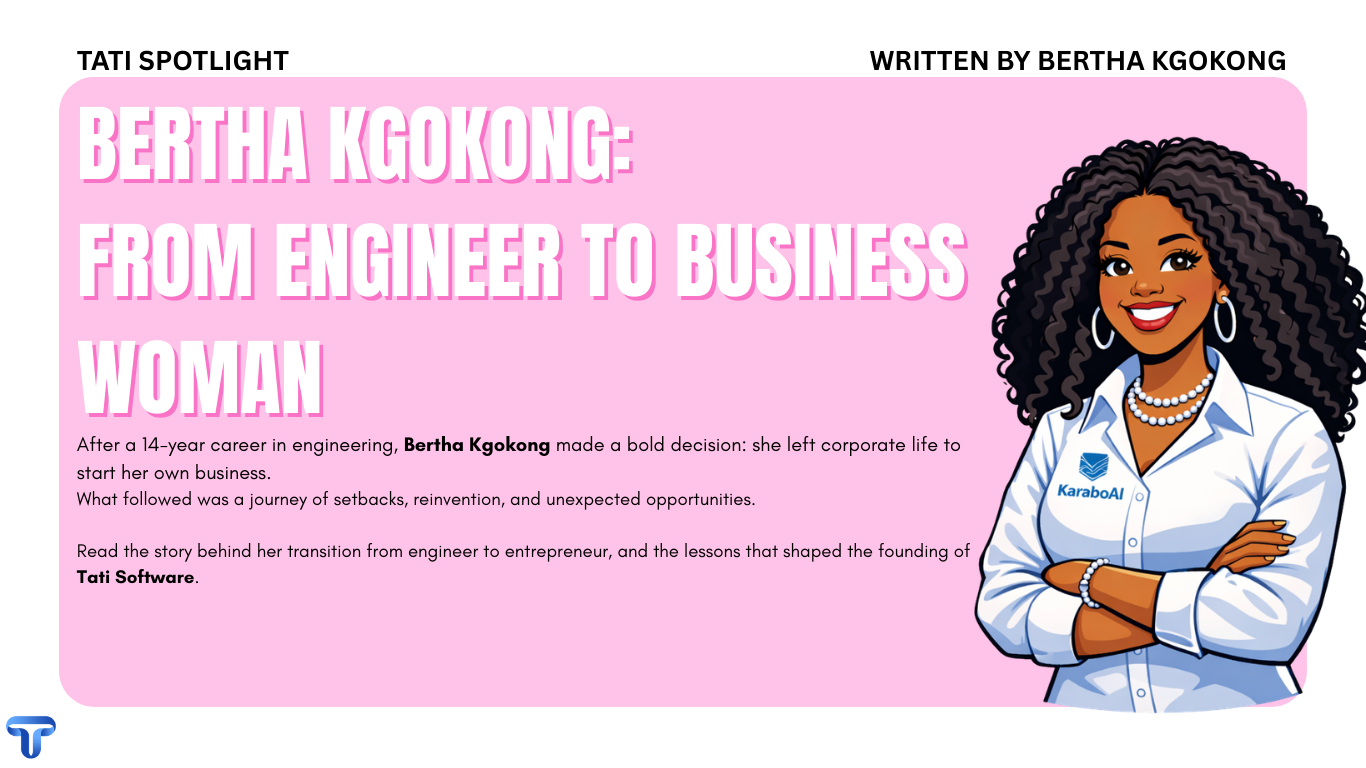
This is where the story begins, at the end of another story. I am 19 years old and I made it. I sat in that classroom in first year where the lecturer said: “In four years, only one out of three will make it out of here – look to your left and look to your right.” Everyone who has been to UCT knows this speech; they give it every year and, true to the fact, a third of us made it and I was there. I got it, my degree, and my life can finally begin.
My first job was at Sasol, four years to pay off the bursary I owed them. I was young and impressionable; this is the place where the best of the best end up. The best from university are scooped up, who are already the ones that made it out of three, who were already the top performing matriculants, from a pool of kids who were the best in their schools. The cream lands here, some of the smartest, most ambitious, and most driven individuals you will meet are all in this Graduate Development Program of Sasol. It can make you feel a bit inadequate; these are people who study the company’s SOPs (Standard Operating Procedures) and Work Instructions.
I keep my head down, do my job, and keep going. Every day we wear these overalls to work: PPE (Personal Protective Equipment). It’s heavy, very hot, and rough. Your whole head is covered with earplugs, eye goggles, a facemask, and the whole town smells. See, Sasol makes petrol from coal in a coal gasification process that was a world first; the whole science is pretty impressive. My days are spent walking up and down the plant, following lines, investigating failures of this pump or that machine, or gathering data for a Capex project for some improvement or another.
Lessons from my first job
A lot of what I know today, I learned in that first job. For example: how to prepare for a meeting where you need to convince people of your idea; how to look into any organisation of people (a group of people that are brought together for a common purpose, such as a management team); identify the decision maker, influencers, and distractors. I learned discipline: how to always be prepared, time management, and more importantly time optimisation.
Writing a good report: never underestimate the power of a well-written, well-formatted, and well-structured document. It does not matter what you are selling, people just think: “This is a great report.” There is a line in The Art of War that says: “Never attack an army whose banners are in perfect order.” It’s about presentation, you are sending a message that says: I am organised, I am knowledgeable, I can do the job. By the time the person starts reading your report, their subconscious mind is already sending positive vibes about you.
From Engineer to Manager
After 4 years at Sasol, I worked at SAB (South African Breweries at the time), Fluor Daniels, Tongaat Hullet, and finally Jacobs Engineering. Sasol took a toll on me physically and emotionally; in the end it did not end well. But I learned my lessons and moved on with my tools and experience. I was going to do even better at my next job, and I did, but had to leave SAB in Cape Town because of my father’s passing in 2008. Then I worked at Fluor Daniel – back to Secunda, the smelly town. Secunda is so smelly that you start smelling it kilometres away as you approach Leandra; you know I am home by the smell. It smells 24/7 until you get used to it and your brain reaches an equilibrium of smell and you don’t smell it anymore.
At Fluor, I did the absolute minimum. I woke up, went to work, did my job, and went home. I would pay for it in the end, because people notice when you are doing the minimum. I was there to earn a salary and honestly was done with Secunda. It was no surprise when I was retrenched, of course; the minimalists go first in retrenchments.
Lesson Learned: Do your research
I was fortunate to get my first manager role at Tongaat Hullet; I was a department head for the process engineering department. I could hire my own process engineers. The lesson I remember from this job is the art of “knowledge, through research” This was my next tool I added to the toolbox: when you are going to meet an organisation of people (a group of people that are brought together for a common purpose, such as a management team), you need to understand before the meeting what they are looking for. Do your research; the aim is to understand the organisational psychology, the biases, and preferences of the decision makers. Answer the question: what does this organisation need?
I am going to go on a tangent here, but I can’t imagine a better illustration of what I mean here than this story. In the TV show called Startup, in one episode the team tries to enlist the help of a cryptographer called Phil Rask who is in prison for a crime. They need his help with solving a vulnerability in their GenCoin algorithm, but he is not going to help them. However, with the right research and forethought, they learn about his obsession with women’s shoes and decide to bring a pair of shoes to the prison during their visit, which actually turns a cold conversation in their favour and they get what they want. Something random like a shoe is what got them the win – the key here is doing the research and discovering your decision maker’s shoe.
The last dance of my corporate career
After Tongaat I knew I had to do my MBA; it was time. I was also thinking my younger sister got her MBA 2 years ago and she is now living in Dubai. What must my father be thinking now watching me from beyond the grave? I am dropping the ball as the “first born, deputy parent of the family.” My career has been going in circles, but the years are going in a straight line.
So, I secured a study loan, registered for the MBA at GIBS, and just did it. At the same time, I got a new job at Jacobs Engineering. I was back to being a process engineer, yet again sent to Secunda.
Something was different in this job. I had found my inner steamroller. It was actually an interesting title that stuck with me from the first personality test I ever did when I was still at Fluor Daniel. The results came back bright red: steamroller. The steamroller was there; it was just out of commission and mothballed. Now it was on, full steam ahead. In this job, I did not spend even a year before I was promoted to Quality Manager on a country level. In that same year I had travelled to both the global headquarters in Pasadena, California, and the regional headquarters in the Netherlands – met the CEO, shook his hand, met the Group regional director, shook his hand too. The then CEO even allowed me to interview all of the organisation’s top directors for my MBA thesis on the “Relational Business Model” of Jacobs, something that was unheard of at the time.
The relationship business model
I spent good years at Jacobs. I learned the most important lesson of all in my toolbox: the value of relationships. It’s all about who you know, not what you know. Build, cultivate, and nurture relationships. Never ever bite the hand that feeds you and never burn bridges. By relationships, I don’t mean be friendly or friends with everyone – relationships are not only about friendship; it’s about mutual understanding, trust, loyalty, and reliability. I can have a relationship with someone I am not friends with. Building relationships is about constructing a foundation of reliability and trust. This has helped me most of all in recent years; I adopted the Jacobs Relationship-Based Business and, true to my MBA thesis, it built an atmosphere of repeat business, referrals, and security for my own business. It is a “shared value” model where everyone wins; you do what you said you were going to do and get value in return that is consistent.
The last dance of my corporate career was a beautiful one. When I made the call to leave and start my own business it was a calculated call because it was time. I thought: it’s now or never, let me give this a shot. Worst-case scenario, I can go back anytime; I have my relationships that I cultivated. So I cleared my debts, put money into savings, sold my house, burnt the ships, and made my move in 2017. A full 14 years of a corporate career was finally over.
The beautiful desert mirage
Let me start by saying, when you first venture into business – you just don’t know what you don’t know. Whatever assumptions I made about how long it would take to turn a profit, about the business I wanted to do, were all wrong. My two-year savings runway went over pretty quickly and I was out on the street by 2019, with less than R10k in the bank to my name. There are many things I could say about that period, but one of my biggest lessons that came out of it was: “cash is king.” When I was looking at my bank balance, it hit home hard – I am going the wrong way, this mirage will never materialise.
Cash is king
See, when many people go into entrepreneurship – and I fell into the same trap – we think the system is there to help us. I thought I will get into this ESD program, get training and exposure to investors, present my pitch deck (another word for a fancy dream on paper), and I will be good. This idea is the one; they will surely invest. No, they won’t. Especially when you look like me, they won’t. They will tell you: get traction, show us the numbers. How many clients do you have? How many employees do you have? Where are your offices? Like – hello, that is why I need the investment.
For me, going from ESD program to accelerator program was a total waste of my precious time, time I cannot afford to waste. The ESD ecosystem is designed to keep that carrot dangling while you pull the weight that gets middlemen paid for running these programmes that claim to help entrepreneurs.
The message hit hard: I need to make money. I need cash, even little money. One day I woke up, left the program, and went back to the drawing board. I had learned quite a bit of coding in this time building my own solutions that I was presenting to investors. I thought, hmmmm, what if I am actually a really great coder?
The black swan
From back in my quality days when we did risk management, we used to have this term: the black swan event. When assessing risk you would be required to also consider events that are so improbable, unlikely to ever happen – but could happen under the right circumstances.
COVID was a black swan event. I mean who could have thought a highly infectious disease could spread across the entire world in just a few months and cause governments to implement a “stay home” policy globally? Stay home, you can’t go to work, all the shops are closed, no socialising at all, because there is a killer disease out there. What happened with COVID was a complete culture shift. People can now work from home. No one is asking me: where are my offices anymore. As bigger companies are struggling to adjust with managing teams from home, some projects are falling through the cracks.
Our first proper project is owed 100% to COVID. I could have meetings on Google Meet, demonstrate what I can do, and they needed the project in 6 weeks and no other dev house could deliver it in that period for the price I could. So I got the project and built an amazing application, and I did it in 6 weeks. I was still a lone developer by then. I used that revenue to buy time. I bought 6 months where I could just sit at home and build. My very first baby, Skhokho 1.0. I got more projects after that, fine-tuned my craft for the next few years, hired an additional developer who I trained straight out of university.
The irony of destiny
The irony of this period is that I learned: working from home does not work. In the early days we could not afford to pay for office space, so we worked from home. Had our morning stand-ups at 08:00 and another catch-up later in the day, decided on the tasks for the day, and went on to work. The problem is that we were ticking the boxes, but we were not moving forward. We remained a two-woman team for over 2 years, just maintaining the monthly revenue. I decided if I am going to grow, I need to get out of my comfort zone and get an office, even if it means moving to a smaller apartment. We need to coordinate better and actually start looking for growth opportunities. So the very same black swan event that gave me my initial jump-start was somehow keeping me in the same state of 0% growth.
The next chapter
The next chapter is still being written. Stay tuned to read about what happens next after I finally decided to shed off the skin and break from my cocoon of comfort. I realised I did not become an entrepreneur just to make the same predictable monthly revenue like I did in corporate. It was time to shatter the ceiling and peek into the next chapter.